Year
2024-2025 (6months)
Client
Project
B2B SaaS
Reporting Redesign
Role
Product Designer
Team






Squizify
Food Safety
How did we transform the reporting experience to enterprise level, impacting 2,500+ venues?
Overview
Squizify is a food safety and compliance SaaS platform trusted by 2500+ venues across Australia, including 7-Eleven and Betty's Burgers. The platform helps venue managers and area managers maintain food safety standards and stay audit-ready through temperature monitoring, task compliance and regulatory reporting.
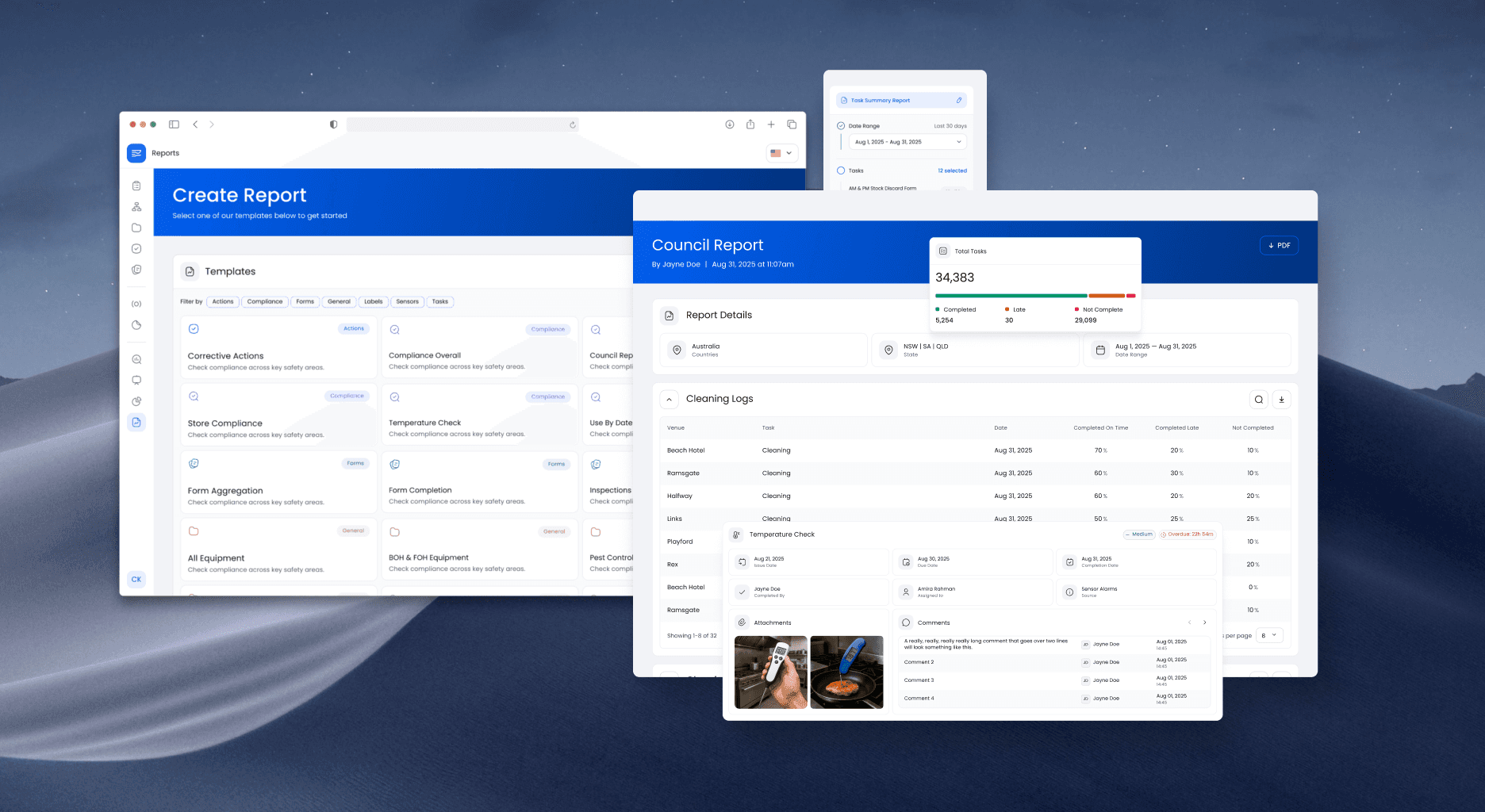
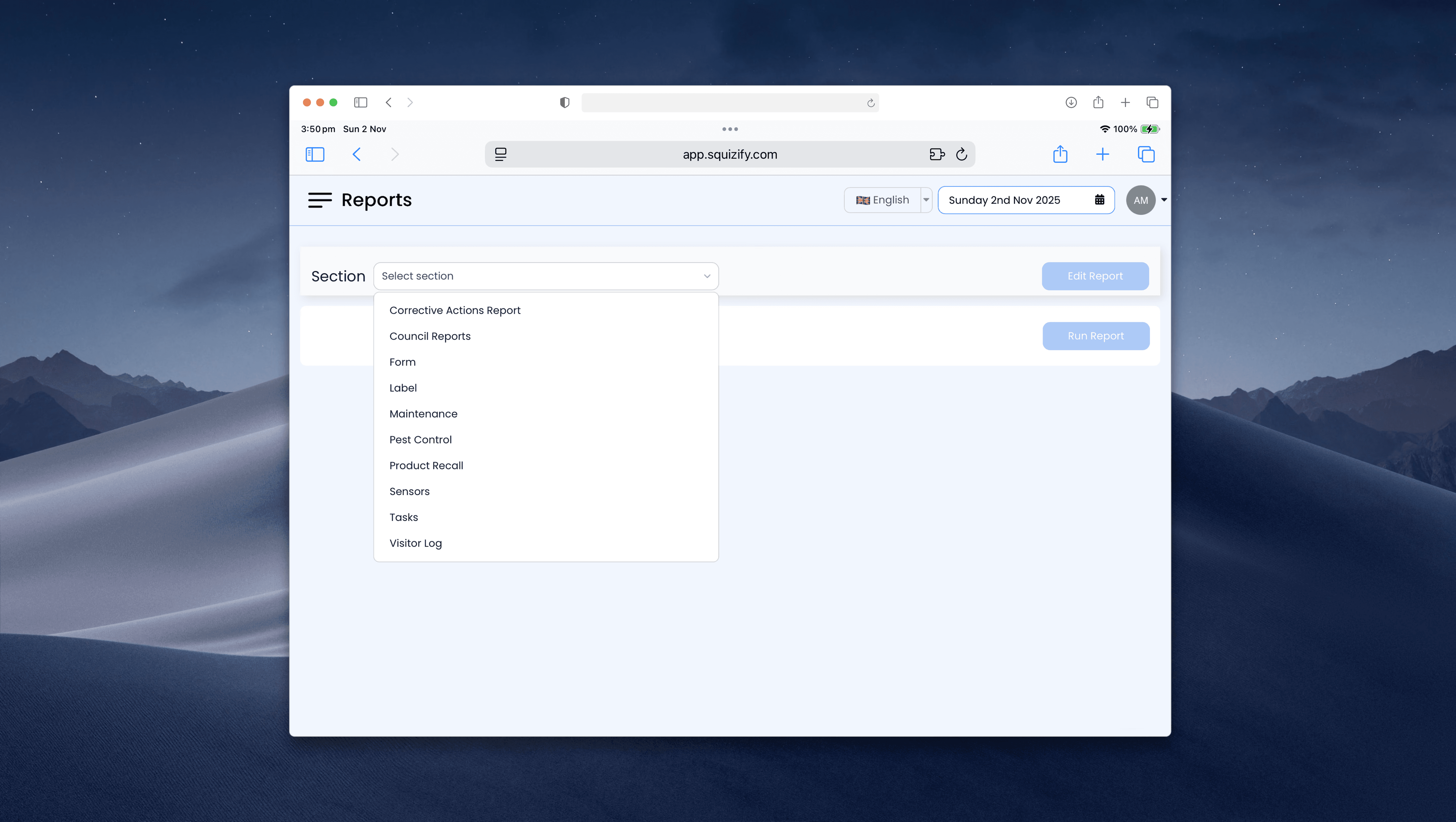
This project was born out of an inconvenient truth, that Squizify was losing potential enterprise clients. Not just because of the outdated UI, but also complex flows and fragmented reports that couldn't be fully used during audits due to missing metadata. The experience became a barrier, leading to heavy support dependency (~40% of monthly support tickets) and preventing scalable growth.
I led research as the solo Product Designer, then collaborated closely with the Design Lead to deliver the final design.
Impact

Adding new custom features won't fix broken fundamentals
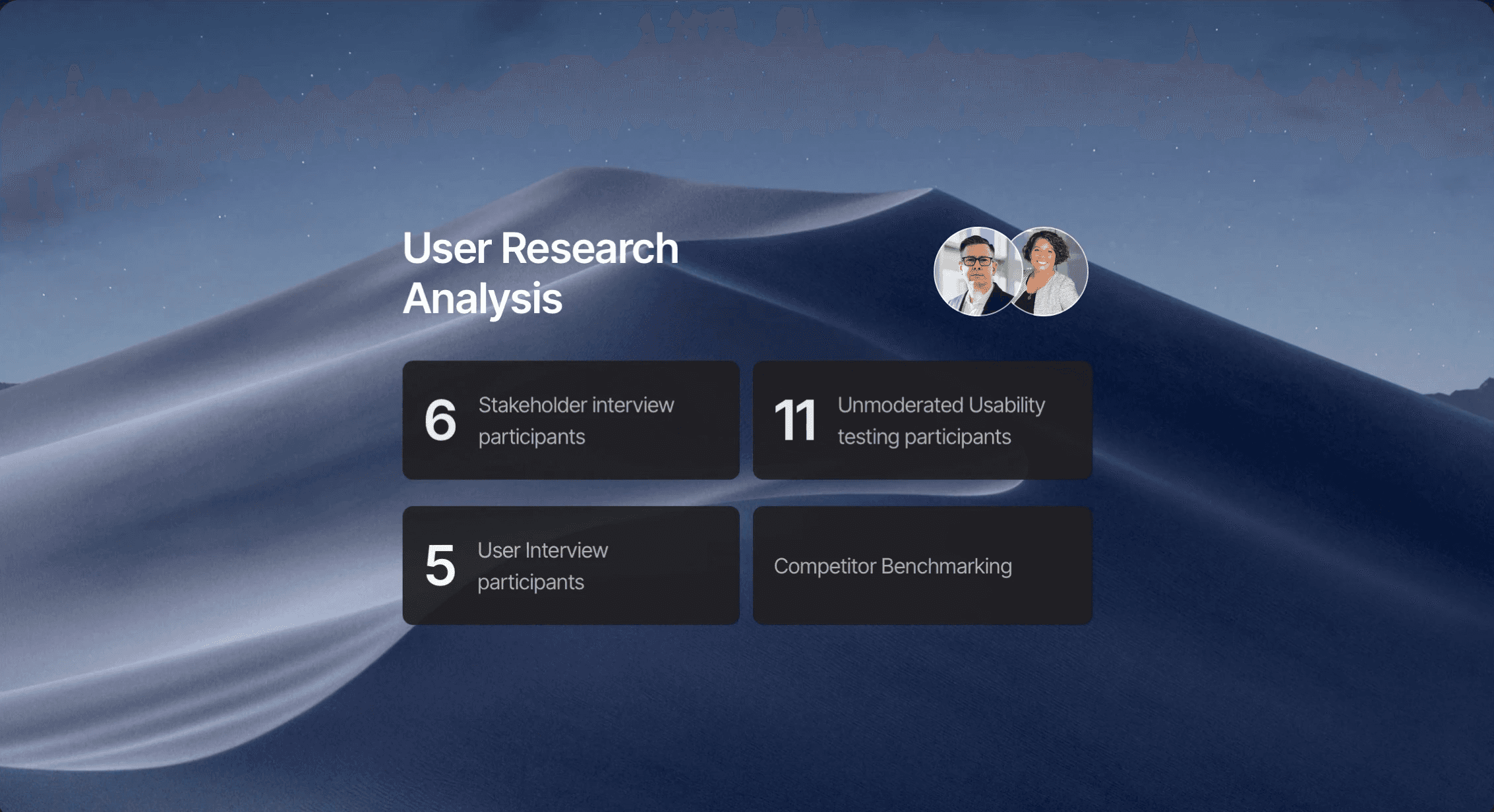
I started where the problems lived, with the Customer Success and Support teams. It was December, the Christmas season (hospitality's busiest time), so I couldn't access users directly. Instead, I analysed competitor products, built a Maze prototype, and sent it to 11 participants: Area Managers and Head Office users, who were experiencing the most acute pain points according to stakeholder feedback.
In January, I followed up with user interviews. Stakeholders kept pushing for custom reporting, but when I tested with real users? Not a single person asked for it.
What I found instead? Area managers wanted to see their data without digging through nested menus, while Head Office users needed consolidated, reliable data for audit. The problem wasn't missing feature, it was discoverability, usability, and trust. (In the end, custom reporting was moved to the backlog with a third-party integration solution planned for the future.)
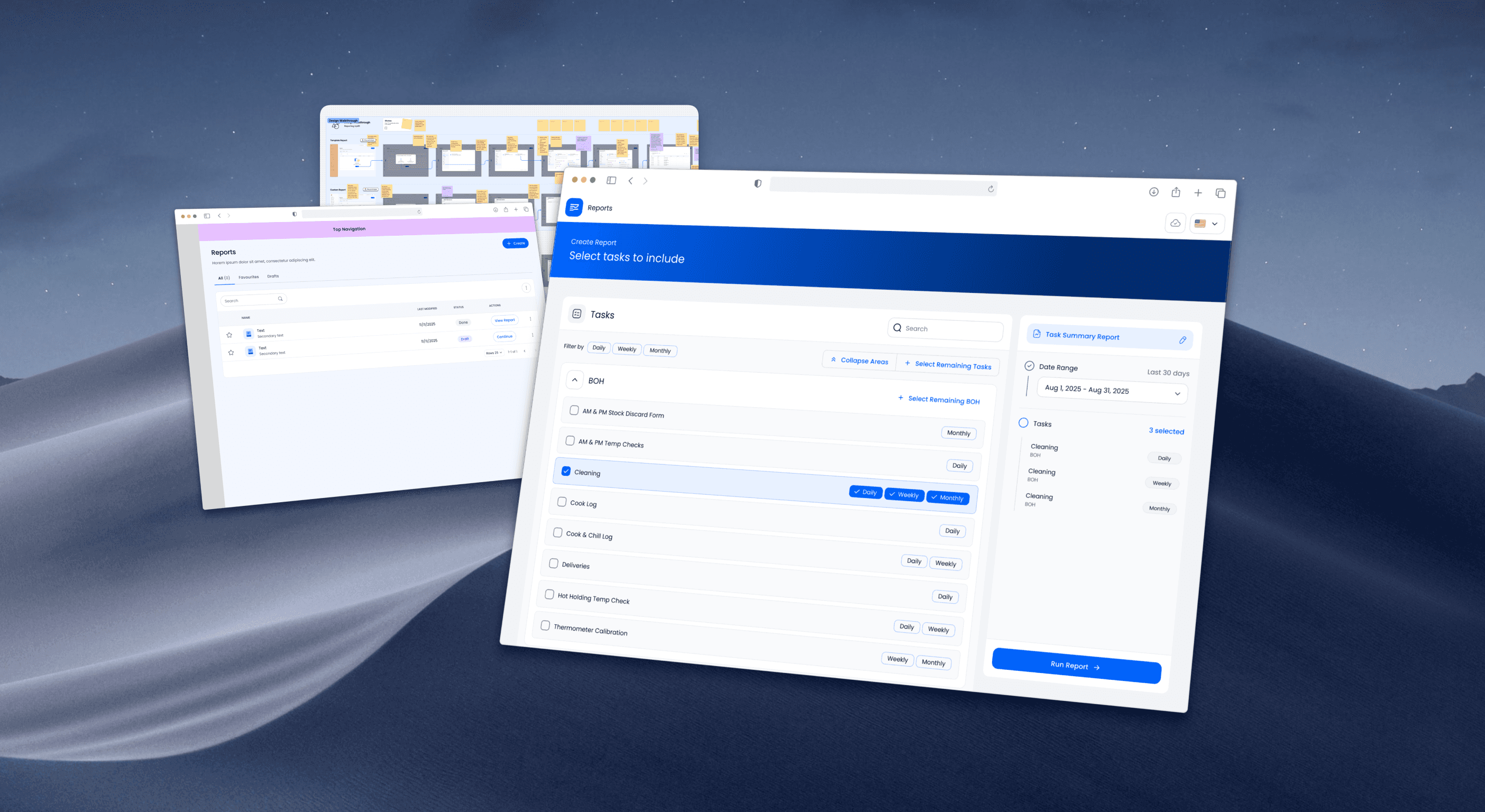
Requirement change: run report on-demand
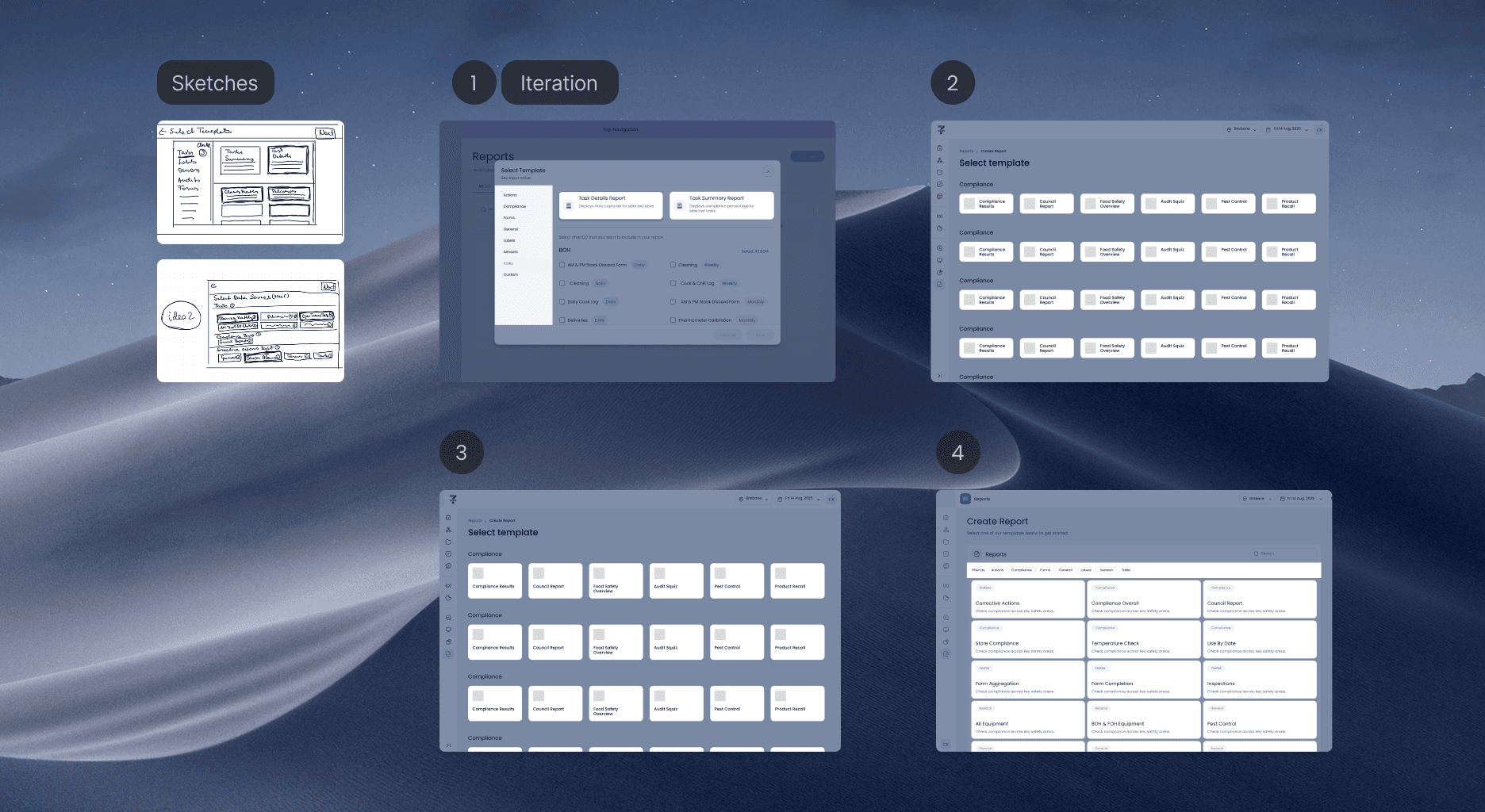
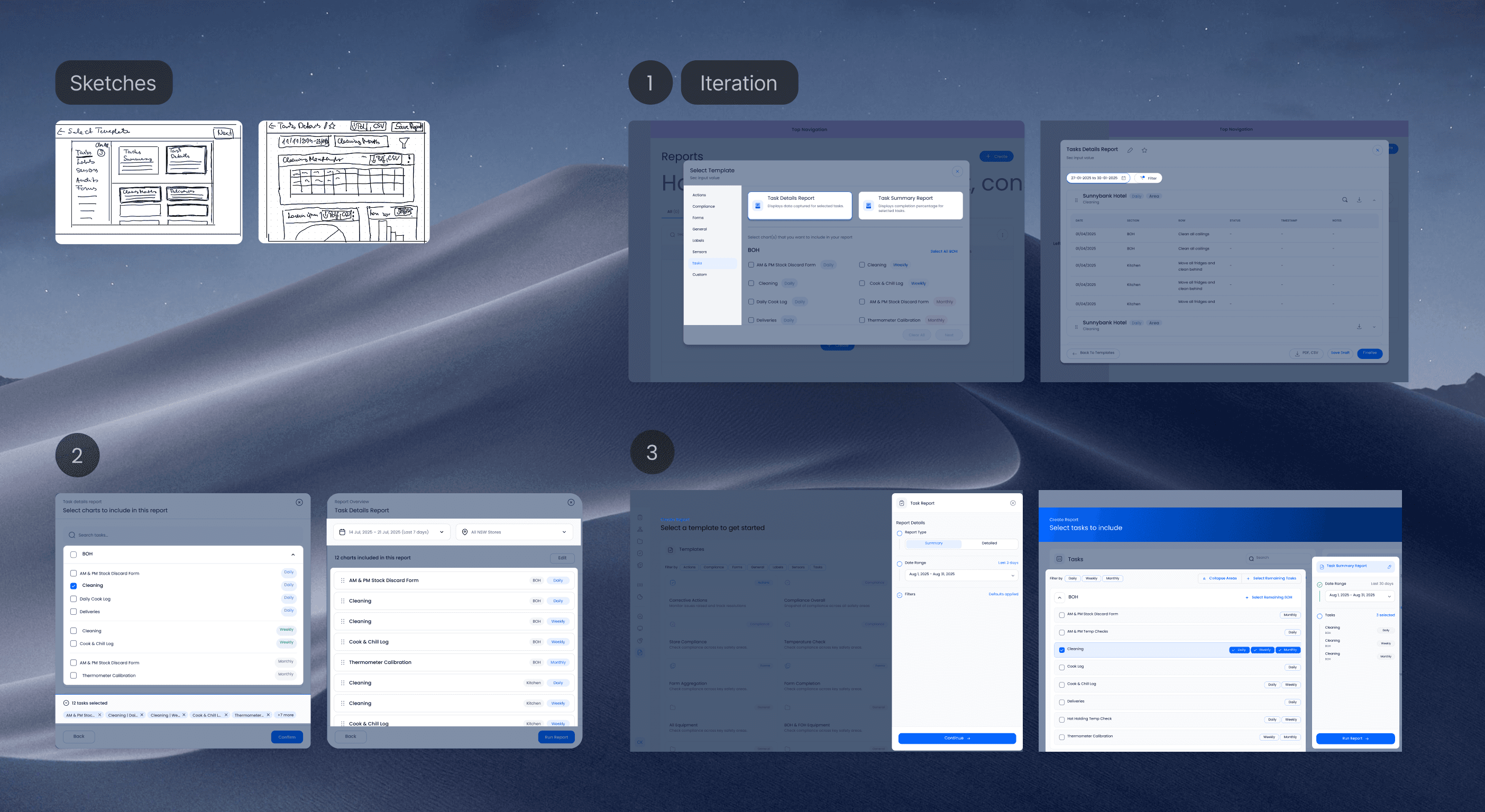
The first prototype was a good start, but when the scope changed (on-demand structure and removing custom reporting) several early design decisions no longer made sense. We workshopped what the new flows should look like.
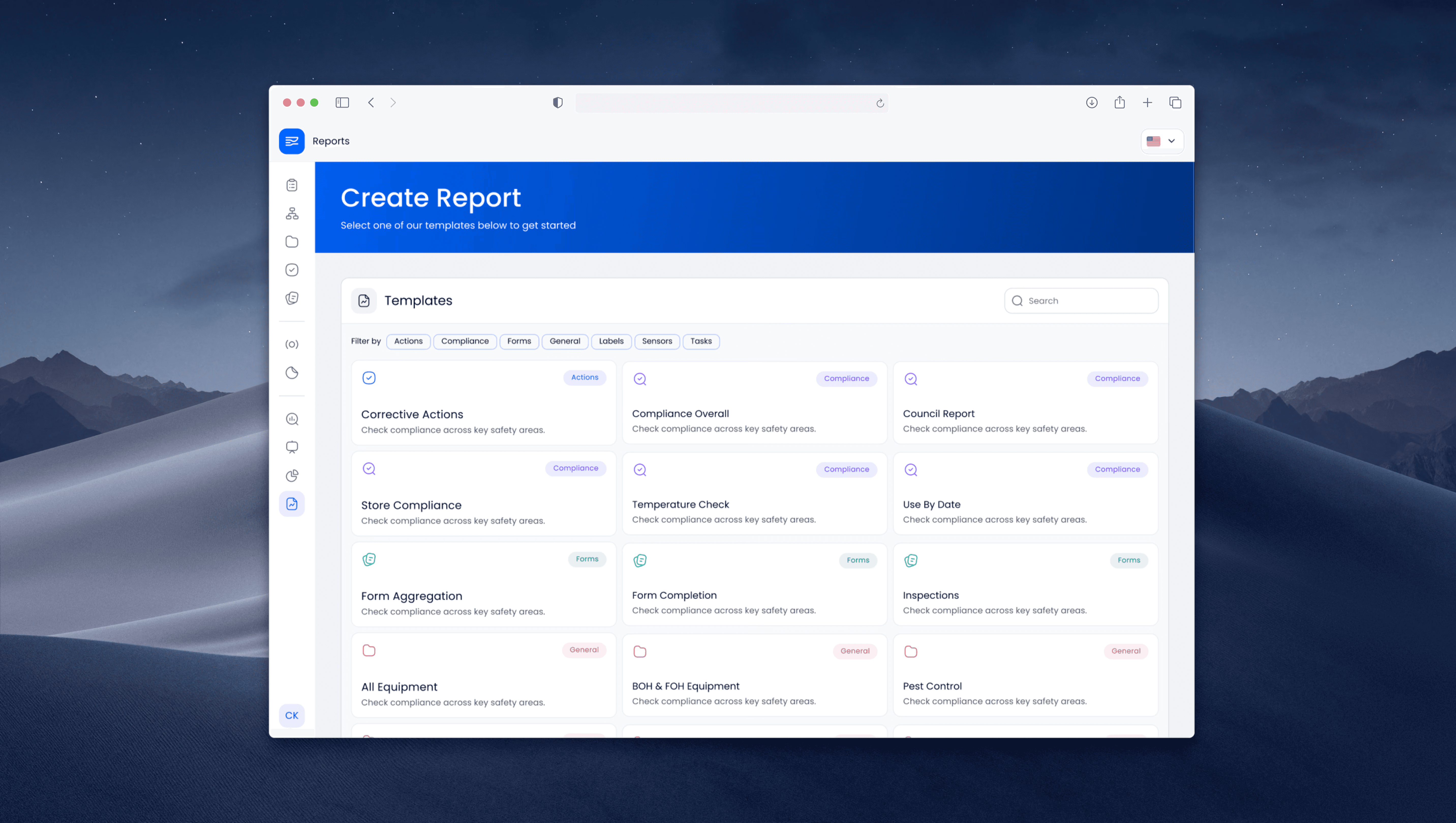
How did we make it easier for users to find reports?
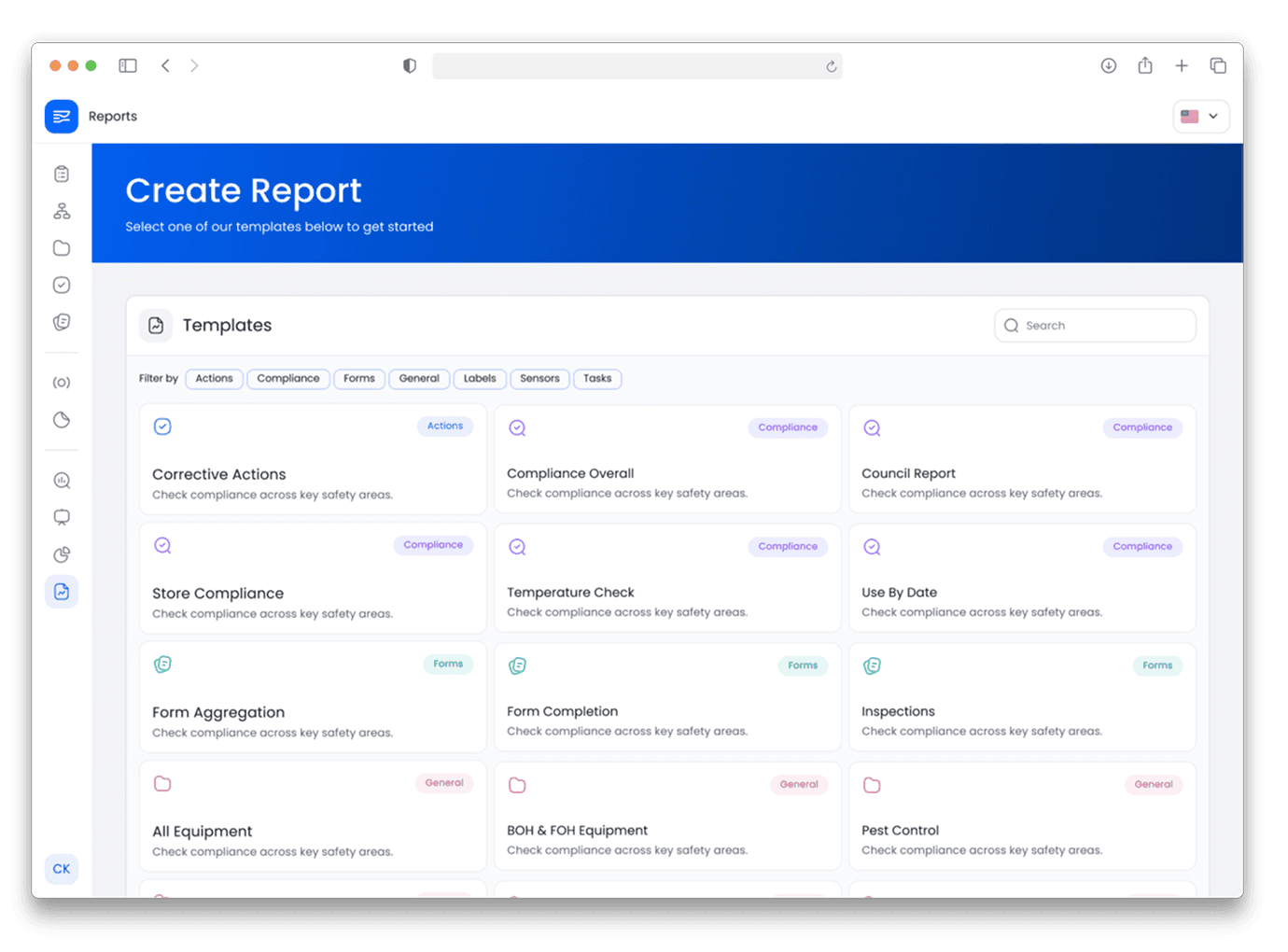
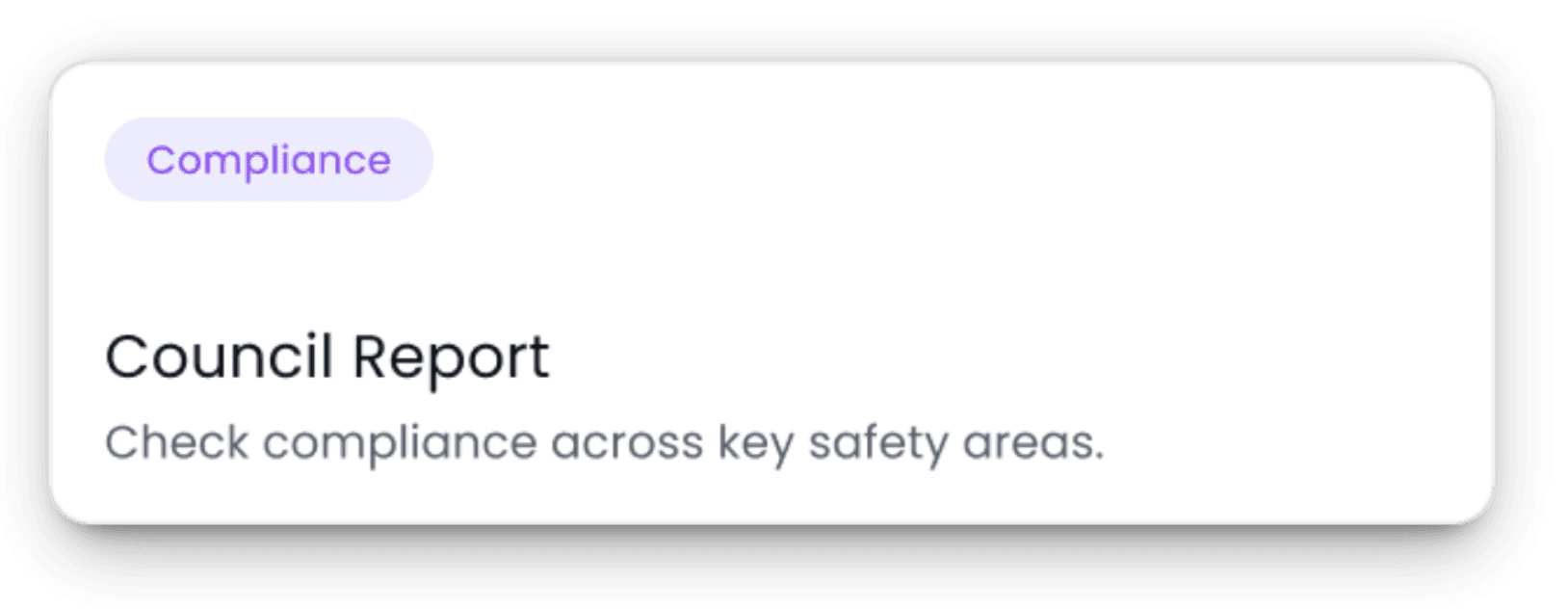
Based on the workshop and research findings, we started the ideation and design work again. Research showed that 71% of participants accessed reports daily, yet 43% struggled to locate the right report , increasing support team workload (~40% of monthly tickets were report-related). Users wasted time searching before they could even start their tasks. We introduced report cards with labels and descriptions, filterable by 7 categories, plus a search function. We used the full screen for report selection, eliminating the modal overlay and giving users more room to scan options.
How did we help users create reports?
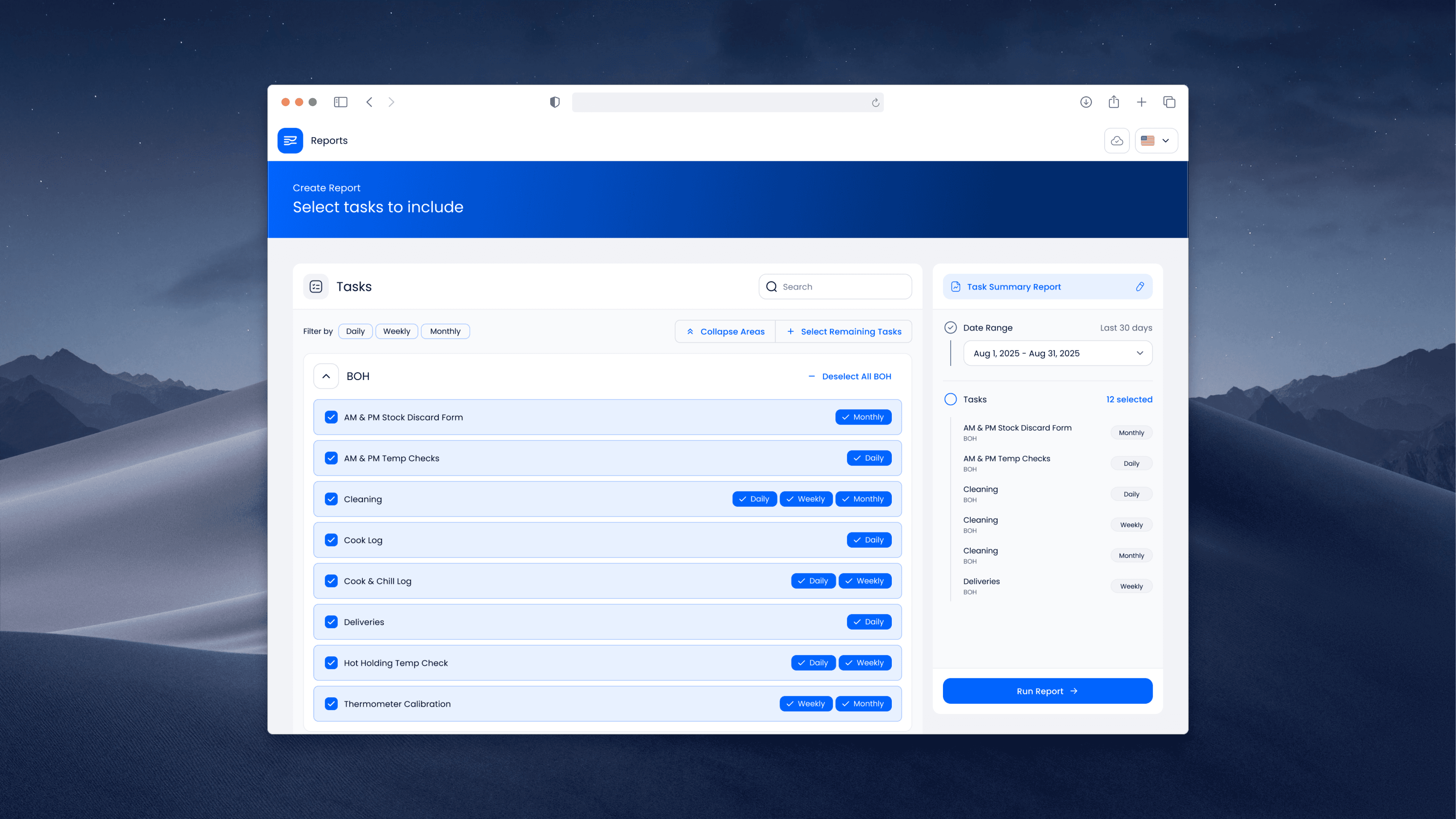
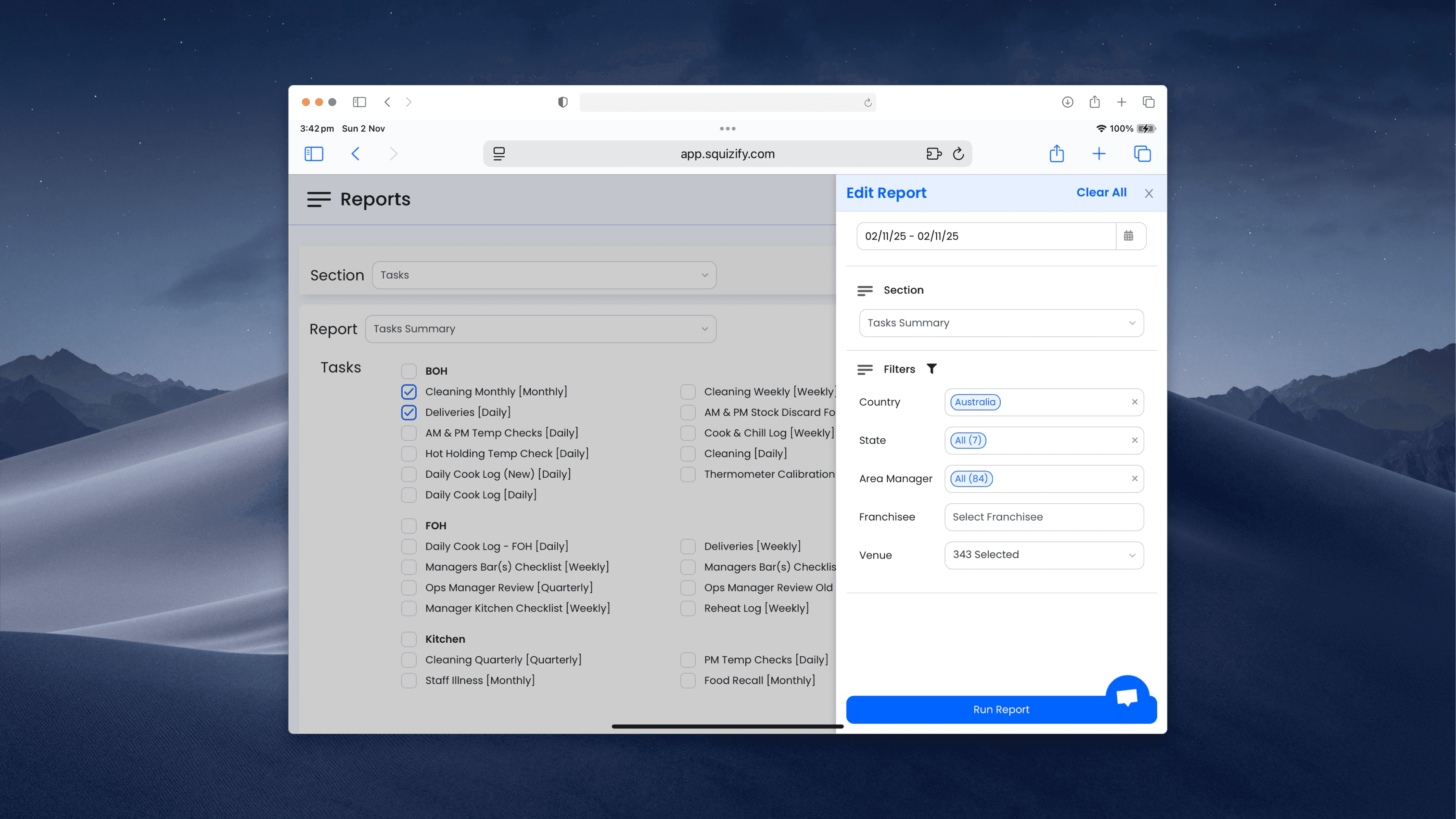
We broke down the report creation journey into two steps: first, set up filters, then, select data sources. For filters we added a "defaults applied" indicator (no more surprise pre-fills), introduced region filtering (solving area managers' biggest issue), and used the full screen with a progress stepper.
The game changer? Putting filters before data sources. This simple switch improved clarity significantly.
How did we help users trust the data?
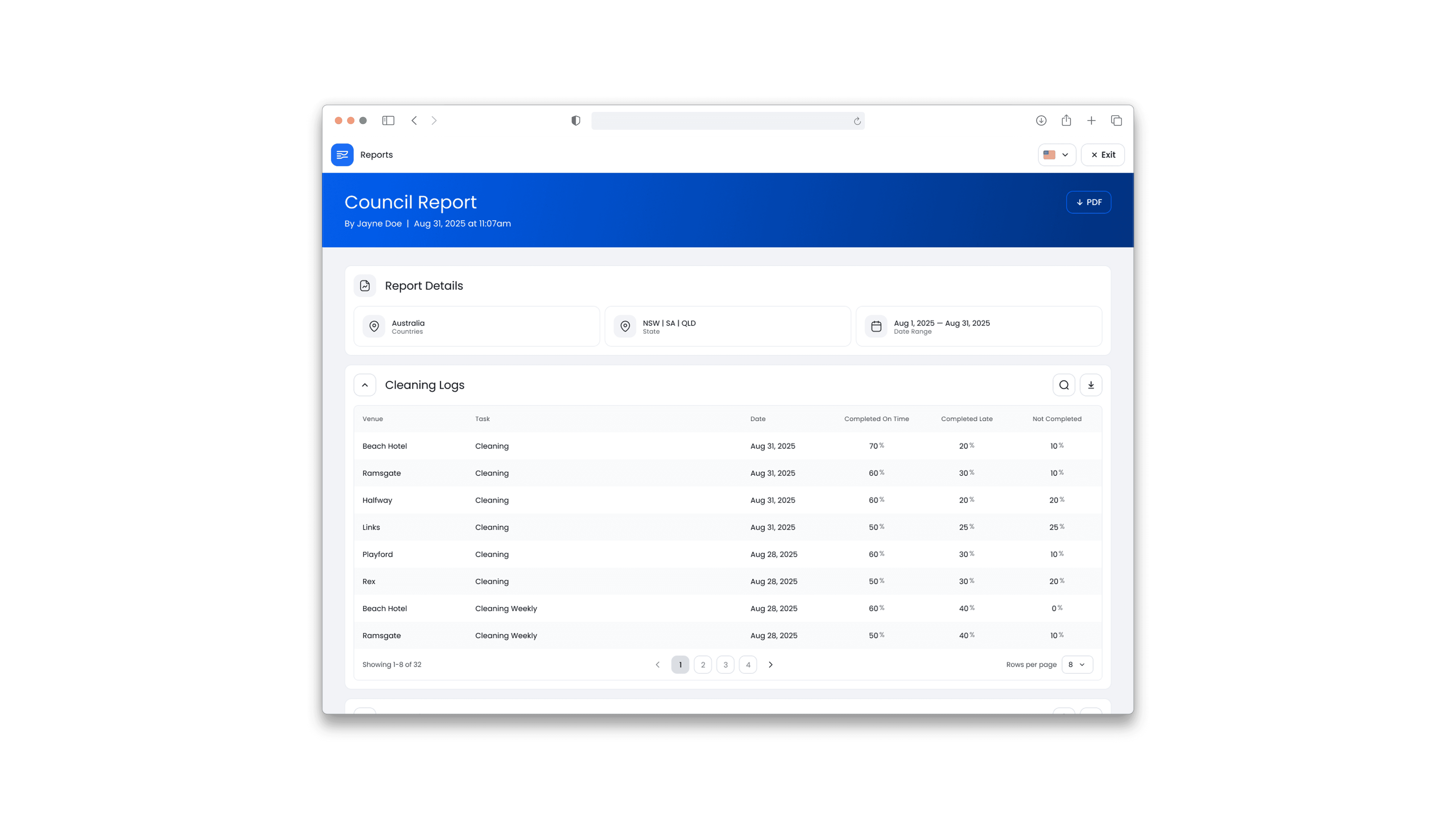
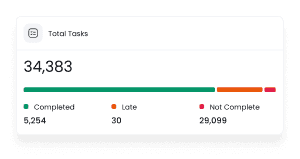
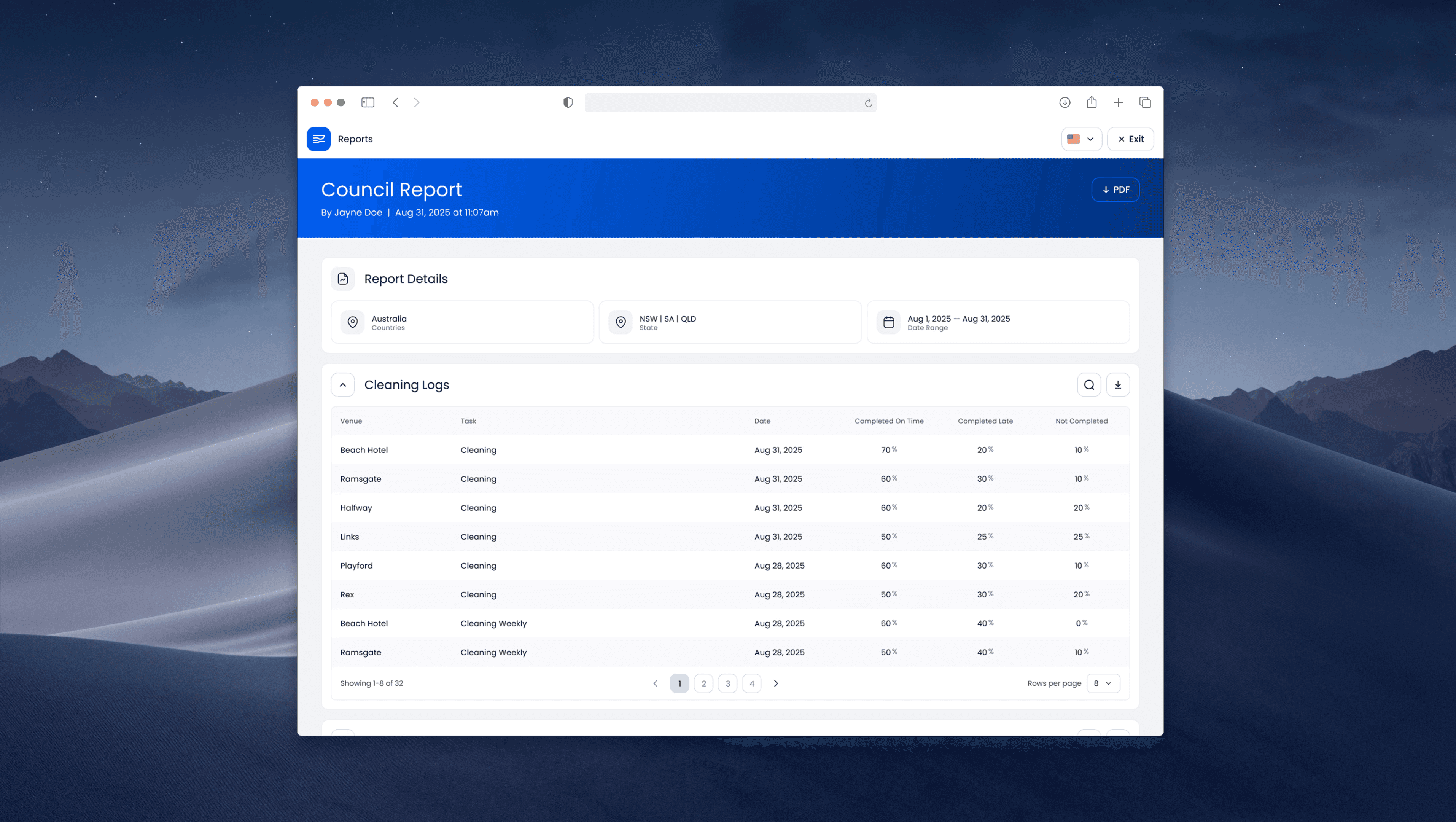
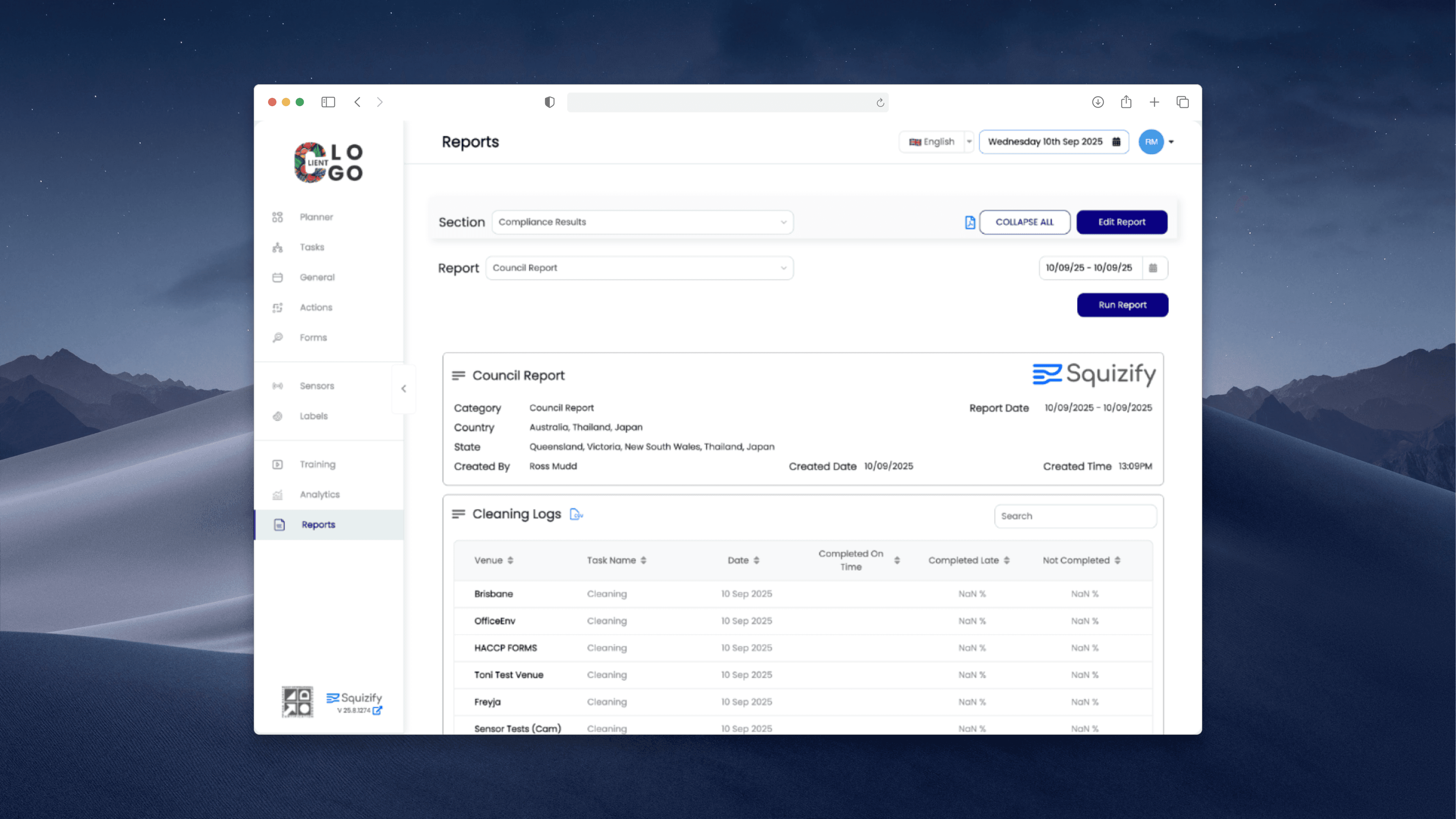
To rebuild user trust, we designed two report layouts (summary and detailed). We added report headers, metrics sections, and collapsible tables using new data visualization components. Timestamps and photo thumbnails provided verification at a glance, and we ensured no duplicate information.
Building a robust design system to ensure consistent and efficient handoff
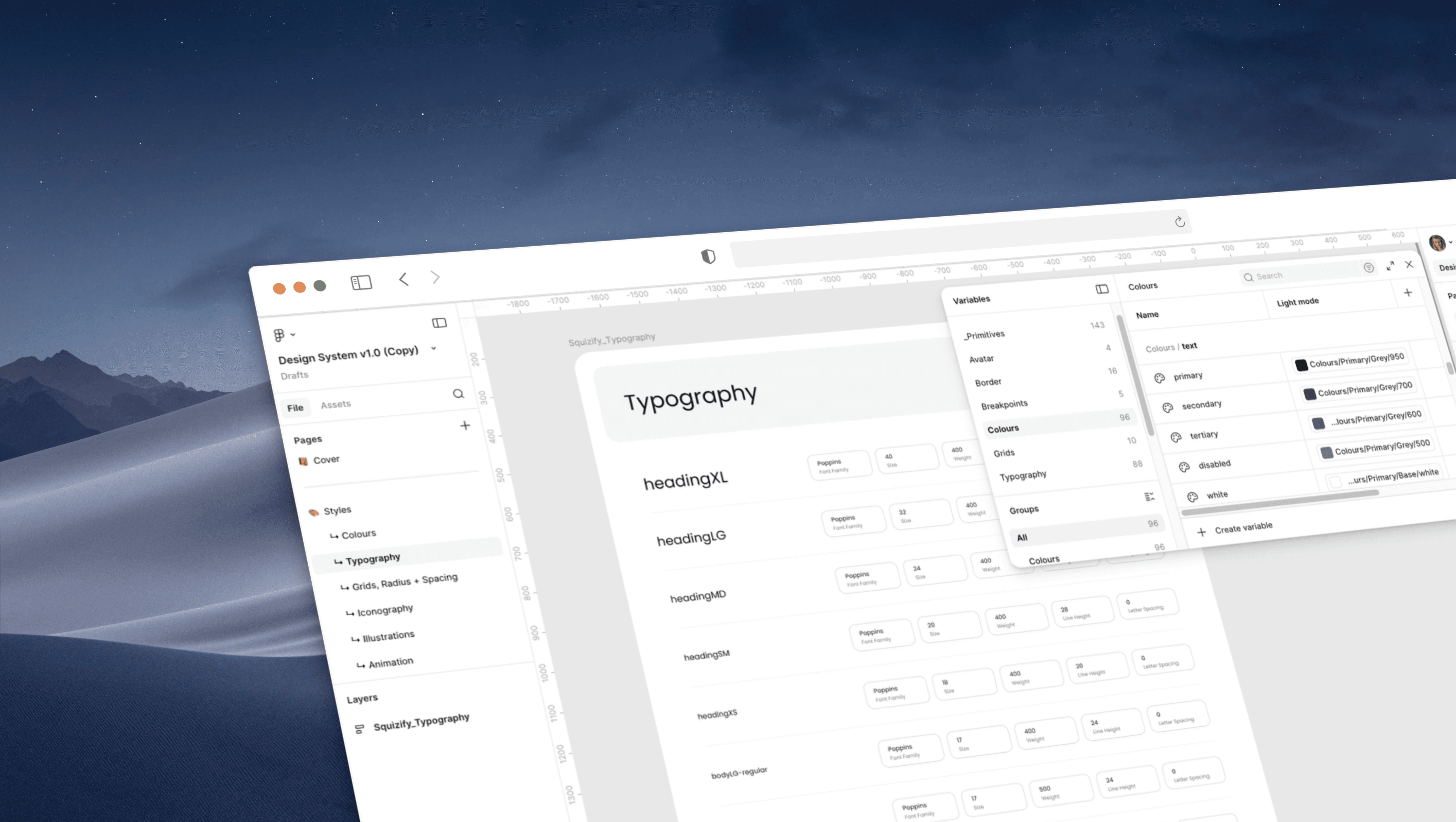
We built a token-based design system to ensure consistency across reporting, with plans to expand it to the entire product later. Using variables and reusable components, we ensured alignment with developers throughout the process.
We documented production-ready designs with detailed screen variations in Figma, making handoff clear and development smooth.
Strong interest from key clients signals a promising rollout
The design was presented to key clients and received very positive feedback. It was handed off to development with pilot testing planned for 3 enterprise clients before full roll-out.
Designing for confidence, not just compliance
This project reminded me that even enterprise products benefit most from empathy, designing not just for compliance, but for confidence. The hardest part wasn't the design, it was advocating for what users actually needed over what stakeholders requested (custom feature).